
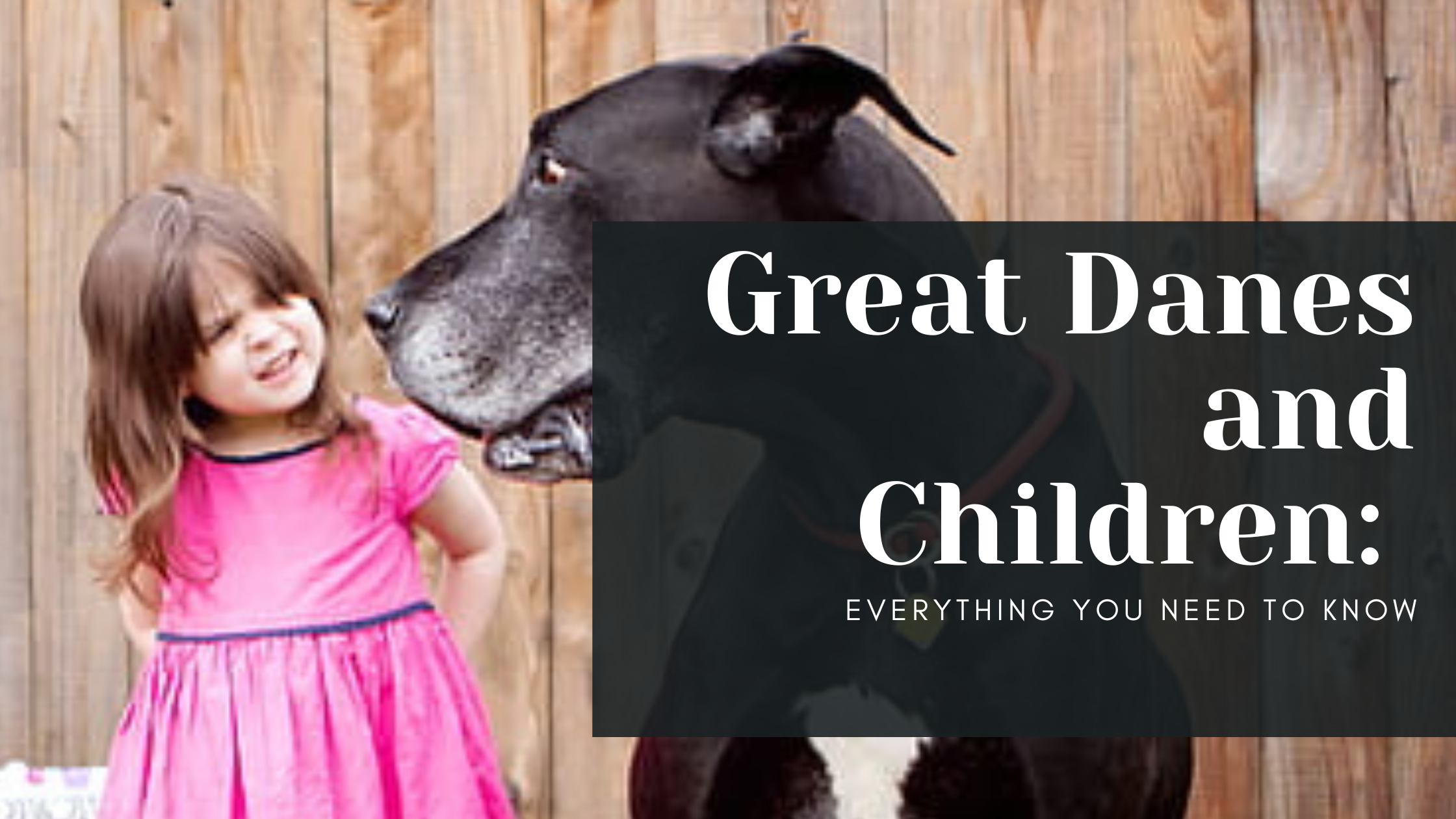
Great Danes and Children: Everything You Need to Know
The article introduces Great Danes as a breed, highlighting their reputation as gentle giants and their popularity among families with children.
It also emphasizes the importance of understanding how Great Danes behave around children and the need to take precautions when introducing them to kids.
The introduction also mentions the importance of finding a reputable breeder and understanding that not all Great Danes are suitable for families with children.
The article aims to answer common questions about Great Danes and children, offering insights and tips on ensuring a safe and positive relationship between them.
Are Great Danes Good with Kids?
Sure, here are some quick and easy tips for kids and large dog breeds:
| Tips for Kids and Large Dog Breeds: |
|---|
| Always supervise interactions between kids and dogs. |
| Teach children to approach dogs calmly and gently. |
| Teach children to respect a dog’s boundaries and not to pull their tail, ears or fur. |
| Do not allow children to climb on, ride or pull a dog. |
| Teach children to never bother a dog while they are eating or sleeping. |
| Teach children to never approach a strange dog without asking permission from the owner. |
| Teach children to never tease, chase or hit a dog. |
| Keep children’s toys and food away from dogs. |
| Provide your dog with plenty of exercise and playtime. |
| Train and socialize your dog to ensure a safe and positive relationship with children. |
Remember, every dog, regardless of breed, has their own unique personality and temperament. It is important to respect your dog’s boundaries and to provide them with a safe and loving home. By following these tips, you can help ensure a happy and healthy relationship between kids and large dog breeds.
Great Danes are best known for their gentle and affectionate nature, making them a great choice for families with children. They are typically patient and tolerant of kids, making them ideal for households with young children. However, it’s important to remember that every dog is an individual and has their personality and temperament, and not all Great Danes are the same.
Great Danes are generally good with children when socialized and trained correctly. They tend to be gentle and loving towards children and enjoy spending time with them. Great Danes are affectionate and loyal dogs and often form close bonds with their human family members, including children.
It is important to note that Great Danes are a large breed, and their size can sometimes intimidate children. They are not as energetic as some other breeds but still require regular exercise and playtime to keep them healthy and happy. Great Danes can be prone to hip dysplasia, which is why it is essential to provide them with regular exercise to keep their joints healthy.
Great Danes are also known for their calm and patient demeanor, which makes them ideal companions for children with special needs. They are often used as therapy dogs because of their gentle nature and ability to provide comfort and support to those in need.
When introducing a Great Dane to children, it is important to supervise their interactions to ensure they are safe and positive. It is also essential to teach children how to behave around Great Danes, including not pulling on their tails or ears and not climbing on them. Children should be prepared to approach Great Danes slowly and calmly and to always ask permission before petting them.
Great Danes are generally good with children when socialized and trained correctly. They are known for their gentle and affectionate nature and can make great companions for families with young children.
However, it is essential to remember that every dog is an individual, and it is important to supervise interactions between Great Danes and children to ensure they are safe and positive. Proper socialization and training are essential to ensure that Great Danes behave appropriately around children, and children should be taught how to behave around them.
What Age Is Safe for Children to Interact with Great Danes?
Great Danes are best known for their friendly and gentle temperament, which makes them great companions for children. However, as with any large breed, it is important to consider the age of the child when introducing them to a Great Dane.
Children under the age of five tend to be at a higher risk of injury from dogs. It is recommended that they do not interact with Great Danes or any large breed without adult supervision. This is because young children may not understand how to play with a dog safely and may inadvertently provoke the dog, which can lead to aggressive behavior.
It is also important to remember that Great Danes are extensive and may accidentally knock over young children during play. As such, it is essential to ensure that interactions are closely supervised and controlled.
For older children, educating them on how to interact with dogs safely is essential. They should be taught to approach dogs slowly and calmly and to avoid rough play or aggressive behavior. Children should also be introduced to respecting a dog’s boundaries and understanding that not all dogs want to be petted or played with.
When introducing a Great Dane to a child, it is important to take the time to do so carefully and gradually. It is recommended to train the dog for the child in a controlled environment, such as on a leash or behind a gate, to prevent any accidents from occurring. This can help to establish a positive relationship between the child and the Great Dane.
Monitoring the dog’s behavior during interactions with children is also essential. Great Danes are known to be patient and tolerant of children, but it is vital to recognize any signs of discomfort or anxiety in the dog. These signs can include growling, showing teeth, or tucking their tail between their legs. If any of these behaviors are exhibited, it is essential to remove the child from the situation immediately and to seek professional advice on how to proceed.
When introducing Great Danes to children, it is best to consider the age of the child and to take the potential necessary precautions to ensure a safe and positive relationship. Supervision is key, and kids should be taught how to interact with great Danes and other dogs safely and respectfully. By following these guidelines, families can enjoy Great Danes’ companionship without compromising their children’s safety.
What Are Some Safety Precautions to Take When Introducing Great Danes to Children?
Introducing a Great Dane to a child can be a fun, exciting, and joyful experience. It is important to remember that dogs are animals and can act unpredictably. It is necessary to take the safety precautions required to ensure that the introduction is safe and controlled. This section will discuss some safety precautions that families can take when introducing Great Danes to children.
1. Supervision
The most important safety precaution when introducing Great Danes to children is always to supervise their interactions. Children should never be left alone with a Great Dane, no matter how well-behaved or gentle the dog is. Even the most docile dogs can become agitated or anxious and may act unpredictably, so it is essential always to be vigilant.
2. Training
Great Danes, like all dogs, require training and socialization to prevent any potential behavior issues that could be dangerous around children. It is essential to teach Great Danes basic commands such as “sit,” “stay,” and “come” and to train them to walk on a leash. Proper training and socialization can help Great Danes learn to behave appropriately around children and understand their boundaries.
3. Introductions
When introducing Great Danes to children, it is essential to do so in a controlled environment. Start by introducing the dog to the child from a distance, allowing the dog to sniff and get used to the child’s scent. After a few minutes, let the child approach the dog slowly without making any sudden movements. It is essential to teach children to approach dogs calmly and gently and to avoid pulling on their ears or tails.
4. Boundaries and Rules
Establishing boundaries and rules for the Great Dane and the child is essential. Children should be taught to respect the dog’s space and not approach them when sleeping or eating. Great Danes should also be prepared to respect children’s boundaries and not jump or play too rough with them.
5. Body Language
Understanding the body language of Great Danes is also important when introducing them to children. Dogs communicate with their bodies, and it is important to understand their signals to prevent any potential misunderstandings. For example, a Great Dane who is showing signs of anxiety or fear may tuck their tail, lower their head, or avoid eye contact. A dog who is showing signs of aggression may stand tall, show its teeth, or growl.
Introducing Great Danes to children can be a rewarding experience for both the dog and the child. However, it is essential to take the necessary safety precautions to ensure that the introduction is safe and controlled. Families should supervise their interactions, provide training and socialization, introduce them to a controlled environment, establish boundaries and rules, and understand their body language. By taking these safety precautions, families can enjoy a positive and safe relationship between their Great Danes and their children.
How Can Children Learn to Respect Great Danes?
Children can learn to respect Great Danes by understanding their behavior and establishing boundaries. Great Danes are known to be gentle and friendly dogs but also large and powerful animals that require respect and proper handling. Teaching children to respect Great Danes keeps them safe and ensures a positive relationship between the two.
One way to teach children to respect Great Danes is gradually introducing them to the dog. Allow the child to observe the dog from a distance before approaching it. This will help the child understand the dog’s behavior and temperament before interacting with it. Children should always ask for permission before coming to a Great Dane and should be taught to respect the dog’s space.
Teaching children not to pull or tug on a Great Dane’s ears, tail, or fur is also essential. These actions can be painful for the dog and can lead to negative behavior. Children should be taught to stroke the dog gently and avoid touching sensitive areas.
Another way to teach children to respect Great Danes is to encourage them to play with the dog appropriately. Children should be prepared to play gently with the dog, using toys that are appropriate for their size. Great Danes love to play and interact with children, but it is important to ensure that playtime remains safe and fun for both the dog and the child.
Teaching children about the signs of aggression in Great Danes is also essential. Children should be prepared to recognize when a Great Dane is feeling uncomfortable or threatened. Symptoms of attack can include growling, snarling, or baring teeth. Children should be taught to stay away from the dog if they observe these behaviors.
It is also essential to teach children about proper dog behavior. Children should be prepared never to approach a Great Dane when it is eating or sleeping, as these are times when the dog can become defensive. Children should also be taught to never run towards a Great Dane, as this can trigger their prey drive.
Supervision is essential when children are interacting with Great Danes. An adult should always be present to supervise the interaction and ensure that both the dog and the child are safe. Children should never be left alone with a Great Dane, no matter how gentle the dog may seem.
Teaching children to respect Great Danes is essential for their safety and for maintaining a positive relationship between the child and the dog. Children can learn to respect Great Danes by understanding their behavior and establishing boundaries, gradually introducing themselves to the dog, and playing with the dog appropriately. Teaching children about proper dog behavior and recognizing signs of aggression can also help keep them safe. Supervision is essential when children are interacting with Great Danes, and children should always be supervised by a Great Dane.
What Are Some Common Misconceptions About Great Danes and Children?
Great Danes are often misunderstood, and there are several misconceptions about their behavior around children. These misconceptions can lead to fear and uncertainty, which can cause unnecessary anxiety and worry for families with children. In this section, let’s address some of the most common misconceptions about Great Danes and their behavior around children.
Misconception 1: Great Danes are Dangerous Around Children
One of the most common misconceptions about Great Danes is that they are dangerous around children. While it is true that any dog breed has the potential to be hazardous, Great Danes are not inherently destructive. Great Danes are known for their gentle nature and are often an excellent fit for families with children. However, it is essential to understand that every dog, regardless of breed, has their unique personality and temperament. Training and socializing your Great Dane is crucial to ensure a safe and positive relationship with children.
Misconception 2: Great Danes Are Too Big and Strong to Be Around Children
Another common misconception about Great Danes is that they are too big and strong to be around children. While it is true that Great Danes are a large breed, they are typically very gentle around children. It is essential to supervise any interactions between Great Danes and children to ensure the safety of both parties. It is also necessary to teach children to respect a Great Dane’s boundaries and approach them calmly and gently.
Misconception 3: Great Danes Need to Be Kept Away from Children at All Times
Some people believe that Great Danes should always be kept away from children. However, this is only sometimes true. With proper training and socialization, Great Danes can make great companions for children. It is important to remember that every Great Dane is different, and some may not be suitable for families with children. However, many Great Danes tolerate children and can form strong bonds with them.
Misconception 4: Great Danes Are Not Playful or Active Enough for Children
Great Danes are often perceived as lazy or need to be more playful for children. However, this is different. While Great Danes may not be as active as other dog breeds, they still enjoy playtime and can be very playful around children. Providing your Great Dane with plenty of exercise and playtime is essential to keep them healthy and happy.
Misconception 5: Great Danes Are Not Good with Other Pets
Another common misconception about Great Danes is that they are not good with other pets. While Great Danes may have a high prey drive towards smaller animals, they can coexist peacefully with other pets in the household. Socializing your Great Dane with other pets and supervising any interactions between them is essential. With proper training and socialization, Great Danes can be great companions for other pets.
Conclusion:
In conclusion, Great Danes are often misunderstood, and several misconceptions exist about their behavior around children. It is essential to understand that every Great Dane is different, and not all are suitable for families with children. However, with proper training and socialization, Great Danes can make great companions for children. It is important to supervise any interactions between Great Danes and children, to teach children to respect their boundaries, and to approach them calmly and gently. Families can enjoy a safe and positive relationship with these gentle giants by understanding the truth about Great Danes and their behavior around children.